Automatic Pill Dispensers and Medication Reminders
An automatic pill dispenser releases the right compartment at the right time and makes noise until someone takes it. That can help an older adult who forgets doses or doubles up. It is still only a reminder: it cannot tell whether the list of medicines is right, whether the pills were swallowed, or whether a new symptom is a side effect. This guide compares the options and the questions to ask before you rely on one.


Who may benefit from a pill dispenser or reminder
The FDA says that as people age they tend to use more prescription and over-the-counter medicines, which raises the chance of side effects and interactions, and that medicines for long-term conditions such as high blood pressure, high cholesterol and diabetes work only when taken regularly as directed. A reminder or dispenser may help someone who:
- takes several medicines at different times of day;
- sometimes cannot remember whether a dose was taken;
- has, or is at risk of, taking extra doses by mistake;
- lives alone, or with family who are out during the day.
Before buying, the FDA suggests talking with a pharmacist or other professional if remembering how and when to take medicines is a problem, because they may have suggestions and tools. A doctor can also review whether every medicine is still needed. If arthritis or low vision makes opening containers hard, ask an occupational therapist, or an eye doctor or low-vision specialist, about easier containers and labels.
How we wrote this guide
No dispenser was tested for this guide. We have no affiliate arrangements and accept no payment for mentions, and we do not rank or recommend products. Safety advice comes from the FDA's medication safety tips for older adults, MedlinePlus (National Library of Medicine) on medication errors, and Medicare.gov's pages on Part D safety checks and Medication Therapy Management. Two manufacturer pages, for Hero and MedReady, are cited only to show what features exist, not as picks.
Types of pill organizer and dispenser compared
| Type | How it works | Strengths | Limits and what to check |
|---|---|---|---|
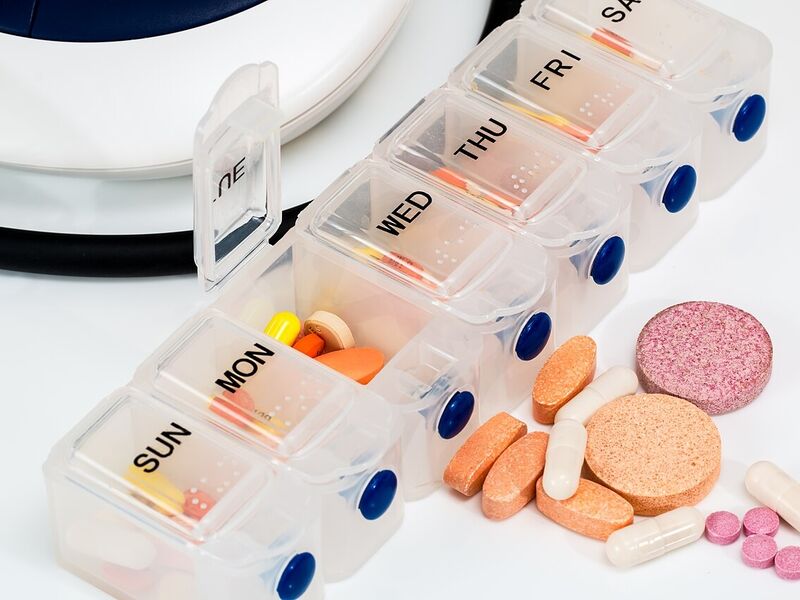
| Weekly pill organizer | Plastic boxes with a lid per day, sometimes per time of day | Simple, no power needed, easy to see a missed dose | No alarm and no lock; someone must fill it correctly each week; check lid size and how hard the lids are to open |
| Alarm reminders (timer box, phone or tablet app) | An alarm or notification at dose times | Low effort; a phone or tablet the person already owns can do this (see our guides to easy-to-use phones and tablets) | Reminds but does not control access; check volume and whether it repeats until acknowledged |
| Locked automatic dispenser | A tray of compartments, loaded in advance, turns to open one compartment at each scheduled time; the rest stay locked | Limits access to the current dose only. One maker, MedReady, says its units dispense up to 4 times per day, sound an alarm, and on monitored models alert caregivers by text, email or phone when a dose is missed | Number of compartments and doses per day, who holds the key or code, battery backup, and how the monitoring connects |
| Connected countertop dispenser | Bulk pills are poured into containers; the machine sorts and releases each dose at the press of a button and logs it in an app | Holds more and sends missed-dose alerts. One maker, Hero, says its unit holds up to a 90-day supply of 10 medicines and signals pill time with a sound and blinking light | Needs Wi-Fi set-up and power; may be sold as a subscription; check pill capacity and how it handles a schedule change |
There is no weight limit to consider. The size questions are physical footprint on the counter, number of compartments or medicines it holds, and how many days it covers between refills; check the label or manual for each.
How to choose a pill dispenser: questions to ask
- How many doses a day, and how many medicines? Count both from the current list and leave room for a change.
- Does it need a lock? If double-dosing or confusion is the worry, a locked model limits access to the dose that is due. Decide who keeps the key or code.
- Who refills it, and how often? Every dispenser moves work to the person who loads it. A weekly organizer needs filling each week; a carousel needs loading for its cycle; a bulk dispenser needs topping up and re-programming when prescriptions change. Mistakes made while loading repeat at every dose.
- What happens if power or Wi-Fi fails? Ask the seller whether the unit has battery backup, whether doses still dispense offline, and how the caregiver is alerted if it disconnects. One connected maker describes Wi-Fi set-up as the step that links the dispenser to its app and schedule.
- Can the medicines safely sit in it? The FDA says medicines that are not stored properly may not work as well, that most belong in a cool, dry place, and that some must be refrigerated. Ask the pharmacist which of the person's medicines can be kept out of their original container.
- Can the person use the alert? Check whether the sound, light and button suit their hearing, eyesight and hands.
A dispenser is not a medication review
A dispenser releases whatever was loaded. It does not check for interactions, duplicate medicines or doses that no longer fit. The FDA notes that medicines may need to be adjusted or changed later in life, and that some side effects mimic other problems, such as memory difficulties, dizziness and sleepiness. Both the FDA and MedlinePlus advise keeping a written list of every medicine, including over-the-counter drugs, vitamins and supplements, with the dose and timing, and showing it to every provider.
Medicare drug plans and pharmacists run routine safety checks, such as for interactions and incorrect doses, before a prescription is filled, according to Medicare.gov. Medicare drug plans must also offer Medication Therapy Management to people who meet certain requirements, at no cost to them. Medicare.gov says it usually includes a discussion with a pharmacist or provider, a comprehensive review of the medicines and why they are taken, and a written summary with a "Recommended To-Do List" and a medication list. Ask the plan whether the person qualifies, ideally before setting up a dispenser.
Costs, coverage and setup
Pill dispensers do not appear on the covered durable medical equipment list on Medicare.gov's DME page (we read the copy archived on 2026-10-23), and Original Medicare does not pay for items outside its coverage, so expect to pay unless other coverage helps. According to Medicare.gov, PACE, cost plans and Medicare Advantage plans can include extra benefits beyond Original Medicare, so ask the plan. Some connected dispensers are sold as a monthly service rather than a one-off purchase; Hero's page, read 2026-11-03, describes its unit as part of a subscription. We give no prices here.
State assistive technology programs, which the Administration for Community Living funds under the AT Act, report device loan and demonstration among their activities, which may let a family try a dispenser before buying. Contact details for each state are on the AT3 Center site. Setup time is real: plan for the first load, the schedule programming and a week of checking that each dose comes out as expected.
Limitations and safety
- It cannot confirm a pill was swallowed. An alert that a compartment was opened is not proof that the dose was taken.
- Loading errors repeat. A wrong pill in a compartment comes out on schedule. Have a second person check the first load against the label.
- Power, batteries and Wi-Fi. Alarms and alerts depend on them; know the plan for a power cut or lost connection.
- Changes after a hospital stay or new prescription. Empty and reload as needed, and update the written list. The FDA says not to skip doses or stop a medicine without talking to a health care professional.
- Keep medicines away from children. The FDA advises storing all medicines up and away from children, which applies to dispensers on a counter too.
- Read the label every time. MedlinePlus advises reading the medicine label rather than relying on memory.
How a caregiver can help with medication reminders
- Keep an up-to-date medicine list beside the dispenser and a copy in the person's bag, as the FDA suggests.
- Load or check the organizer or dispenser on a set day, against the pharmacy labels, and note the next refill dates.
- At dose times, prompt, offer water and watch that the dose is taken, then record it.
- Notice and report possible side effects such as new dizziness, drowsiness or confusion.
- Collect prescriptions, and bring the list and any questions to the pharmacist or doctor.
- Agree in writing what the caregiver does, for example reminders only, and what stays with family or a nurse.
Our medication reminders page describes this kind of help, and a companion caregiver can combine it with meals, errands and company. On CaregiverConnect families post jobs free, speak to applicants and hire them directly. We do not perform background checks, so the safety page sets out what to verify. Next step: find a caregiver near you.
Frequently asked questions
What is the difference between a pill organizer and an automatic pill dispenser?
An organizer is a box of labeled compartments filled by hand, with no alarm or lock. An automatic dispenser opens or releases the scheduled dose at set times, usually with an alarm, and some lock the other doses away.
Are locked pill dispensers good for someone with memory loss?
A locked dispenser limits access to the dose that is due, which may help when double-dosing is a worry. It cannot confirm the pill was swallowed, so someone should still check, and the doctor or pharmacist should review the medicine list.
Does Medicare pay for automatic pill dispensers?
Medicare.gov does not list them as covered durable medical equipment. A Medicare Advantage plan may offer extra benefits, and state assistive technology programs may lend or demonstrate devices.
Do smart pill dispensers work without Wi-Fi?
It depends on the model. App alerts need a working connection, and one maker describes Wi-Fi set-up as how its dispenser connects to the schedule. Ask the seller what happens during an outage and whether there is battery backup.
Can a pharmacist help instead of a dispenser?
Often alongside one. The FDA says pharmacists may have suggestions and tools for remembering medicines, and Medicare drug plans must offer Medication Therapy Management, including a full medication review, to people who qualify.
Sources
- FDA, 4 medication safety tips for older adults
- MedlinePlus (NIH/NLM), Medication errors
- Medicare.gov, Safety checks, drug management programs, and Medication Therapy Management
- Medicare.gov, Durable medical equipment (DME) coverage (archived copy, 2026-10-23)
- Medicare.gov, What's not covered by Original Medicare
- Administration for Community Living, Assistive technology (State Grant for AT programs)
- AT3 Center, Find an Assistive Technology Act program
- Hero Health, How it works (manufacturer page; feature example only, read 2026-11-03)
- MedReady, Automated medication dispensers (manufacturer page; feature example only, read 2026-11-03)
Ready to find a caregiver?
Post what you need for free and see which caregivers near you apply.