Blood Glucose Meters: Choosing One and Testing at Home
For an older adult with diabetes, a glucose meter is the everyday tool that shows whether the care plan is working. The right meter is one the person can see, handle and use correctly every time, and the result is only as good as the strip, the drop of blood and the technique. This guide covers the device types, the features worth paying attention to, the accuracy checks the FDA describes, Medicare coverage and the caregiver's role.

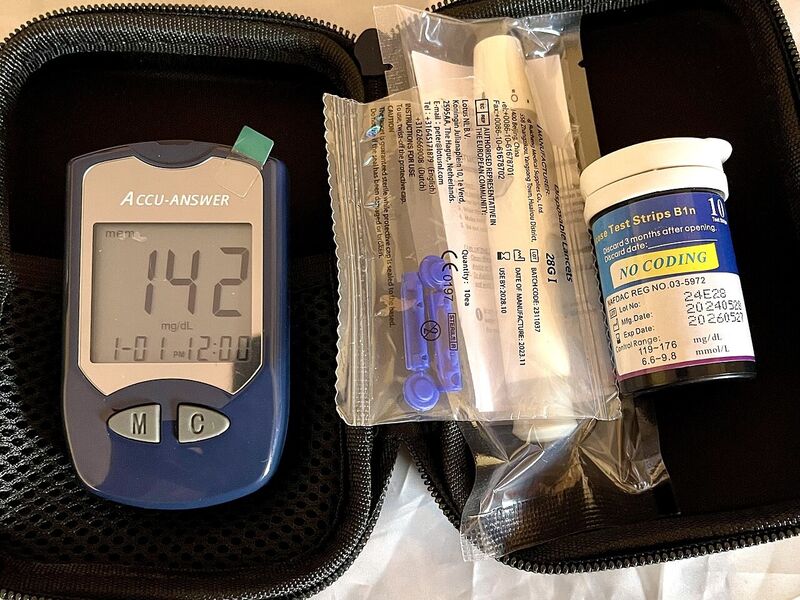

Who may benefit from a home glucose meter
The FDA says people with diabetes should monitor their blood sugar with a blood glucose monitoring device. The American Diabetes Association (ADA) suggests talking to a doctor about whether to check, and lists groups who may benefit from regular checks, including people who take insulin, who have trouble reaching their targets, or who have low blood glucose, especially without the usual warning signs. The CDC calls monitoring the most important thing you can do to manage diabetes and says the doctor will tell you when and how often to check.
Professional help that may be useful:
- Doctor or diabetes care team: sets the target range and the testing schedule, and decides whether a continuous glucose monitor (CGM) makes sense.
- Diabetes self-management education: the CDC says this is available and that you can ask a doctor for a referral, which can help when the diagnosis is new.
- Pharmacist: can explain which strips fit which meter and whether any medicine or supplement interferes with readings.
- Eye doctor or low-vision specialist: if reading a small screen is a struggle.
How we wrote this guide
We did not test any meter, monitor or strip. Nothing on this page is sponsored or linked for commission, and we name and rank no brand or model. The content draws on the FDA's blood glucose monitoring device page and its 2024 safety communication on smartwatches and smart rings, the CDC's monitoring page, the ADA, the National Institute of Diabetes and Digestive and Kidney Diseases (NIDDK) and Medicare.gov's coverage pages for monitors, test strips and CGMs.
Types of glucose testing device compared
| Type | How it works | What the sources say | Features to compare |
|---|---|---|---|
| Fingerstick meter | A lancet pricks the finger; a drop of blood goes on a test strip in a handheld meter | The FDA's description of a standard home test system; results in mg/dL | Screen size, blood drop size, test speed, memory, strip cost |
| Meter with low-vision features | As above, with extras | The FDA lists a large display, spoken instructions or spoken results as features for people with visual impairment | Volume, voice clarity, button size |
| Meter that shares data | Sends results to a computer, phone app or cloud service | The FDA lists data transfer among choice factors; the CDC says some meters use an app, and a written log is fine without a phone | Whether the person or caregiver will actually use the app |
| Continuous glucose monitor | A sensor worn on the body tracks glucose through the day | Medicare may cover one for people who take insulin or have a history of low blood sugar (see below). NIDDK says a CGM may be a good option for people with hypoglycemia unawareness, and some can sound an alarm when glucose drops below target | Sensor site, alarms, who reads the data, training |
| Smartwatch or smart ring claiming to read glucose without a needle | Claims non-invasive sensing | Do not use. The FDA says it has not authorized any smartwatch or ring that measures glucose on its own | Not applicable |
A glucose meter has no weight limit. The physical things to check are overall size, how easy the strips are to pick up and insert, and the amount of blood each test needs.
How to choose a blood glucose meter
The FDA lists what to weigh: accuracy, the amount of blood per test, ease of use, alternate-site testing, speed, overall size, result storage, substances that interfere with the test, data transfer, the cost of the meter and strips, the maker's technical support, and features for people with low vision. For an older adult, a few of those matter most:
- Can they see and handle it? Try inserting a strip with the hands the person actually has. Stiff or numb fingers make small strips hard to manage.
- Strip cost and supply. Strips are the ongoing expense, so check what the insurer or Medicare supplier provides for that meter before choosing.
- Interferences. The FDA says vitamin C, acetaminophen and xylose absorption therapies may affect some results, and that dehydration, anemia, an extreme hematocrit or conditions with high uric acid, such as gout, can too. Check the strip leaflet and ask the pharmacist.
- Ask the care team. The FDA notes your provider may have a recommendation based on your needs.
Testing blood sugar at home: steps and accuracy checks
The CDC's steps: wash hands with soap and warm water and dry them well, prick the finger with a lancet, put a small drop on the strip, place the strip in the meter, and record the result. Cold hands can make it hard to get enough blood, so the CDC suggests warming them before washing. The ADA suggests using the side of the fingertip, and the FDA says to wash hands again afterward.
To make sure the meter is reading properly, the FDA describes three checks:
- Control solution: run a test each time you open a new container of strips, now and then during the container, after the meter is dropped, and whenever results do not match how the person feels. The result should fall within the range printed on the strip vial.
- Electronic self-check: the meter checks itself when switched on; the manual explains any error code.
- Lab comparison: bring the meter to an appointment, test while the clinician watches your technique, and compare the result with a lab blood test.
Keep the strip container tightly closed and store everything as the maker directs. The CDC says moisture, humidity and extreme temperatures can damage strips, and the FDA says to use only new strips authorized for sale in the U.S.
Medicare coverage, other help and supplies
Medicare.gov says Part B covers blood glucose monitors, and its separate pages cover test strips, lancets and lancet holders, and control solutions, all as durable medical equipment. The terms on those pages:
- Part B pays for medically necessary DME when a doctor or other health care provider orders it for use in the home.
- Get the items from a supplier enrolled in Medicare; Medicare.gov says it pays only for DME from enrolled suppliers.
- Once the yearly Part B deductible is paid, the person owes 20% of the Medicare-approved amount, provided the supplier accepts assignment; Medicare.gov warns that suppliers outside that arrangement can bill you more.
- Depending on the item, Medicare may require renting, require buying, or allow either.
Continuous glucose monitors: Medicare.gov says Medicare may cover a CGM and supplies such as sensors for a person with diabetes whose provider orders them, if the person takes insulin or has a history of low blood sugar, and if the person or their caregiver has had enough training to use it as directed. The provider must evaluate the person first.
Medicare Advantage plans have their own supplier networks, so check with the plan. If a spare meter would help, for example at a second home, the state assistive technology program (listed by the AT3 Center) may have device loan or reuse options. We give no dollar figures here.
Limitations and safety
- Follow the clinician's plan. The CDC gives 80 to 130 mg/dL before meals and below 180 mg/dL one to two hours after as ranges for most non-pregnant adults with diabetes, but says a target may differ with age, health and the care plan. Use the target the doctor sets.
- Low blood sugar. NIDDK says that if glucose is below target or under 70 mg/dL, take 15 to 20 grams of glucose or carbohydrate, recheck after 15 minutes and repeat until back in range, and that severe lows can lead to passing out, coma or death. Ask the doctor whether a glucagon kit is needed.
- Alternate sites. The FDA says testing on the arm, palm or thigh can be inaccurate when glucose is changing fast, and lists when to use the fingertip instead: when ill, just after eating, insulin, exercise or stress, when low glucose is suspected, or when results do not match how the person feels.
- Never share. The CDC says not to share monitoring equipment, especially lancets, even with family. The FDA notes over-the-counter systems are for a single person.
- No needle-free watches or rings. In its February 2024 safety communication the FDA warned that wrong readings from these can lead to wrong medicine doses and dangerously low glucose.
How a caregiver can help with glucose testing
The CDC advises having someone else learn to use the meter in case the person is sick and cannot check. Practical ways a caregiver can help:
- Set out the kit at test times: meter, strips, lancing device, a fresh lancet, the log, and a container for used lancets as the pharmacist advises.
- Prompt hand-washing and warming of cold hands before the finger prick.
- Read the result aloud if the screen is hard to see, and write it down with the time and anything relevant, such as a late meal or extra activity.
- Keep a fast-acting carbohydrate within reach and know the doctor's plan for lows and highs.
- Track the strip supply and expiry dates, and run a control test when a new container is opened.
- Bring the meter and log to appointments.
A companion caregiver can build these steps into the day, and our medication reminders page covers help with the wider medicine routine. Agree in writing with the family and the clinician which tasks the caregiver will and will not do. Families can post a job on CaregiverConnect for free and hire directly; since CaregiverConnect runs no background checks, our safety guidance lists checks to do yourself. Then find a caregiver near you.
Frequently asked questions
What is the easiest glucose meter for a senior to use?
This page ranks no models. The FDA suggests weighing accuracy, blood drop size, ease of use, display and memory, and notes some meters offer a large display or spoken results for people with low vision. Ask the care team for a recommendation.
Does Medicare cover glucose meters and test strips?
Yes. Medicare.gov says Part B covers blood sugar monitors, test strips, lancets and control solutions as durable medical equipment when a provider orders them, with 20% coinsurance after the Part B deductible from a supplier that accepts assignment.
Will Medicare pay for a continuous glucose monitor?
It may, Medicare.gov says, if the person has diabetes, takes insulin or has a history of low blood sugar, has been trained to use the CGM, and has been evaluated by the provider who orders it.
How do I know if a glucose meter is accurate?
The FDA suggests control solution tests (for example with each new container of strips), watching for error codes, and comparing your meter with a lab blood test at an appointment while the clinician checks your technique.
Can a smartwatch check blood sugar?
Not on its own. The FDA says it has not authorized any smartwatch or smart ring that measures glucose without piercing the skin, and advises against buying or using them. Apps that display data from an authorized CGM are a different thing.
What blood sugar level should a senior aim for?
That is for the doctor to set. The CDC gives 80 to 130 mg/dL before meals and under 180 mg/dL one to two hours after as ranges for most non-pregnant adults with diabetes, but says targets may differ by age and health.
Sources
- FDA, Blood glucose monitoring devices
- FDA, Do not use smartwatches or smart rings to measure blood glucose levels: FDA safety communication (February 21, 2024)
- CDC, Monitoring your blood sugar (web.archive.org copy of 2026-10-20; live page returned 403)
- American Diabetes Association, Checking your blood sugar
- NIDDK, Low blood glucose (hypoglycemia)
- Medicare.gov, Blood sugar monitors
- Medicare.gov, Blood sugar test strips
- Medicare.gov, Continuous glucose monitors
- Medicare.gov, Durable medical equipment (DME) coverage (archived copy, 2026-10-23)
- AT3 Center, Find an Assistive Technology Act program
Ready to find a caregiver?
Post what you need for free and see which caregivers near you apply.