Hearing Aids for Seniors: OTC vs Prescription and Costs
Since October 2022, adults who believe their hearing loss is mild or moderate can buy a hearing aid off the shelf, without an exam. That makes hearing aids for seniors easier to get, but it also puts more choices on the family. This guide sets out what separates over-the-counter (OTC) from prescription devices, which warning signs mean a doctor should look first, how coverage works, and what a helper at home can do each day.


Who may benefit, and when to see a professional first
Hearing loss is very common later in life. NIDCD, the hearing and communication institute at the National Institutes of Health, says about one in three people in the U.S. aged 65 to 74 has hearing loss, and nearly half of those older than 75 have difficulty hearing. Because it creeps up slowly and usually affects both ears, many people do not notice it themselves.
A hearing aid may help someone who struggles to follow speech in a group, a noisy room or on the phone, keeps asking people to repeat themselves, or sets the TV louder than everyone else wants it. Those are the FDA and NIDCD signs of a loss the person perceives as mild to moderate, the range OTC devices are built for. Trouble hearing speech even in a quiet room, or not hearing loud sounds such as engines or power tools, points to a more severe loss; NIDCD says to consult a hearing health professional in that case.
Some symptoms call for a doctor, preferably an ear, nose and throat specialist (ENT), before anyone buys a device. The FDA-required OTC box warning lists these:
- blood, pus or fluid draining from the ear in the past 6 months;
- hearing that changed suddenly in the past 6 months, or that gets worse and then better again;
- dizziness or a spinning feeling (vertigo);
- ringing or buzzing in only one ear;
- a lot of earwax, or the sense that something is in the ear;
The National Institute on Aging (NIA) adds that sudden deafness should be treated as a medical emergency. A primary care doctor can refer; an audiologist measures hearing loss and can recommend and fit aids.
How we wrote this guide
Nobody at CaregiverConnect has tried, fitted or reviewed a hearing aid for this page. It carries no affiliate links and no sponsored placements, and we do not rank makers or models. Everything here comes from government sources read on November 3, 2026: the FDA's hearing aid pages and the OTC rule in the Code of Federal Regulations (21 CFR 800.30), NIDCD and NIA at the National Institutes of Health, Medicare.gov, the Administration for Community Living and the VA. Where a source says a clinician should decide, so do we.
OTC vs prescription hearing aids, and the main styles
First, the three categories of sound-boosting device sold today:
| Category | Who it is for (per FDA / NIDCD) | How you get it | Fitting |
|---|---|---|---|
| OTC hearing aid | Adults 18 and over who perceive their hearing loss as mild to moderate | In a store or online, no exam or prescription needed; also sold by audiologists and dispensers | You fit and adjust it yourself, through controls, built-in tests or an app |
| Prescription hearing aid | Any degree of loss and any age, according to its labeling | Only through a licensed hearing health professional | The professional programs it to your measured loss and follows up |
| Personal sound amplification product (PSAP) | People without hearing loss who want certain sounds louder in specific settings, such as bird-watching | Off the shelf | Not regulated by the FDA as a medical device, and not meant to treat hearing loss |
Physical styles differ by size, placement and power; there is no weight rating to compare.
| Style | Where it sits | Degree of loss (NIDCD) | Points for older users |
|---|---|---|---|
| Behind-the-ear (BTE) | Case behind the ear, tube to an earmold | Mild to profound | The FDA calls BTE aids easy to clean and handle and relatively sturdy |
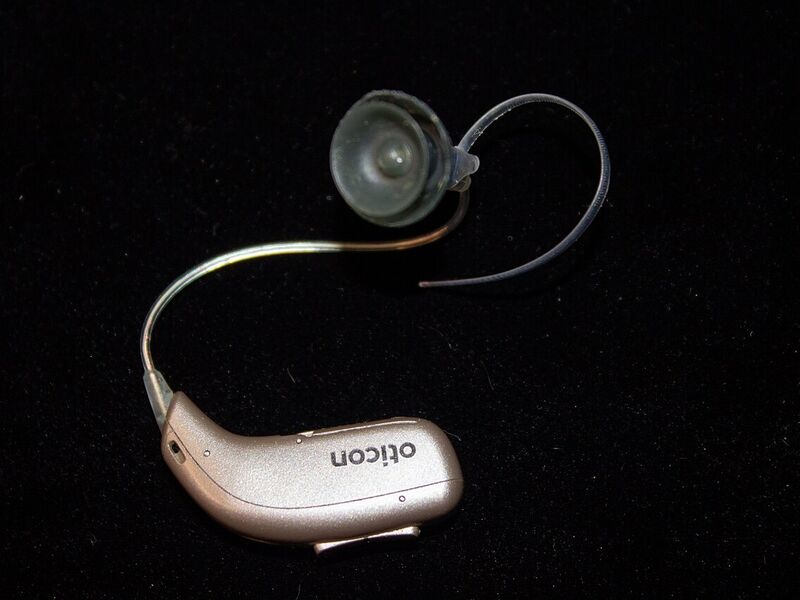
| Mini BTE / receiver-in-canal, open-fit | Small case behind the ear, thin tube into an open canal | Varies by model; check the label | NIDCD says open-fit aids may suit people prone to earwax build-up and avoid a "plugged-up" voice |
| In-the-ear (ITE) | Shell filling the outer ear | Mild to severe | Larger than canal aids, so the FDA says they may be easier to handle; room for a telecoil |
| In-the-canal (ITC) and completely-in-canal (CIC) | Partly or almost fully inside the ear canal | Mild to moderately severe | Smallest and least visible, but NIDCD warns they can be hard to adjust and remove, with less space for batteries and extras |
Features worth comparing, as the FDA describes them: directional microphones that favor the voice in front of you, noise reduction, feedback suppression to stop whistling, a telecoil (T-coil) for phones and venues with a hearing loop, wireless streaming, and direct audio input for a TV or remote microphone. The FDA notes that more advanced electronics may raise the price.
How to choose: fit, features and safety checks
- Match the device to the loss. OTC aids are capped in loudness by federal rule, so they may not give enough benefit for severe or profound loss. If an OTC aid has been tried without success, NIDCD says to see a hearing professional.
- Think about hands and eyes. Tiny aids and batteries are hard for stiff fingers or weak eyesight; a larger or rechargeable model may be easier.
- Two ears or one. With loss in both ears, NIDCD says two aids are generally recommended.
- Read the box before buying an OTC aid. Federal rules require the outside of the package to state the battery type and number, whether batteries come with it, whether a mobile phone or remote is needed to control it, whether it is used or rebuilt, and the return policy.
- Check the trial and warranty. NIDCD says most manufacturers allow a 30- to 60-day trial. The FDA points out that its OTC rule does not require a warranty, so confirm the terms and leave enough time to test the aids at home, outdoors and in noisy places.
- Be wary of badges. The FDA says "FDA Registered" or "FDA Certified" on an OTC box may be misleading.
Two built-in safety limits apply to every OTC aid under 21 CFR 800.30: maximum output may not exceed 111 dB SPL (117 dB SPL with input-controlled compression switched on), and the design must keep the deepest part at least 10 millimeters from the eardrum.
Costs, Medicare and other help paying
Price range. NIDCD's hearing aid page, read on November 3, 2026, says hearing aids range from hundreds to several thousand dollars, with style and features driving cost.
Original Medicare. Medicare.gov states plainly that Medicare does not cover hearing aids or exams for fitting them, and that you pay all costs for those. What Part B does cover is a diagnostic hearing and balance exam when a doctor or other provider orders it to see whether you need medical treatment. Medicare.gov adds that you can see an audiologist once every 12 months without an order for non-acute conditions, such as hearing loss that develops over many years.
Medicare Advantage. Medicare.gov says these plans may cover extra benefits Original Medicare does not, such as certain hearing services. Benefits differ by plan, so call the plan and ask what is included.
Medicaid. NIDCD notes Medicaid pays for hearing aids for eligible people 21 and under through EPSDT; for older adults, ask your state Medicaid office.
Veterans. The VA's Prosthetic and Sensory Aids Service says that once an enrolled veteran's VA audiologist recommends and fits hearing aids, the aids, repairs and future batteries come at no charge while the veteran keeps VA eligibility.
Other routes. NIDCD notes that some nonprofits help pay for or refurbish hearing aids. Each state's assistive technology (AT) program, funded through the Administration for Community Living, lets people try devices, borrow them for a while or receive donated used ones; find yours through the AT3 Center's state directory.
Upkeep. NIDCD advises cleaning aids as instructed because earwax and drainage can damage them, avoiding hairspray while wearing them, and storing batteries and small aids away from children and pets.
Limitations and safety
- They do not restore normal hearing. NIDCD says a hearing aid increases awareness of sounds with practice, but cannot make hearing normal, and if the inner ear is badly damaged it may not help at all.
- Early side effects. NIDCD lists mild discomfort at first, your own voice sounding loud and "plugged up," whistling from a poor fit or earwax, and buzzing with some cell phones.
- Report harm. The FDA asks people to report injuries or malfunctions, such as ear irritation, an overheated battery or a piece stuck in the ear, through MedWatch or 1-800-FDA-1088.
Hearing care also matters for safety. NIA says even small amounts of hearing loss are linked to a higher risk of falls, and its falls guidance advises that anyone with a hearing aid make sure it fits well and wear it. The FDA's OTC page states that using hearing aids "may reduce the frequency or severity of cognitive decline, depression, and other health problems in adults"; it does not say they prevent any disease.
How a caregiver can help with daily hearing aid use
NIDCD stresses that hearing aids take time and patience, and that regular wear is what helps people adjust. Someone who visits often can help that routine take hold:
- Go to the fitting. NIDCD suggests practicing, with the audiologist present, putting the aid in and taking it out, cleaning it, telling left from right and changing the battery. A second person who learns this can coach later.
- Set a morning and night routine. Put aids in after washing and dressing, take them out before bed, wipe them, and place them in the case or charger in the same spot every night.
- Note problems for the audiologist. Whistling, soreness, or a voice that sounds too loud are worth writing down with the date and setting.
- Talk in a hearing-friendly way. NIDCD's tips: face the person, speak a bit louder without shouting, slow down, turn off the TV during conversation, and pick quieter tables when eating out.
For phones, our guide to easy-to-use phones explains hearing aid compatibility labels. Families who would like someone to drop by, chat, drive to audiology visits and keep the hearing aid routine going can look at companion care. Listing that job on CaregiverConnect is free, and you interview and employ the person yourself. Because we run no screening of our own, use the list on our safety page before hiring, then find a caregiver near you.
Frequently asked questions
What is the difference between OTC and prescription hearing aids?
OTC hearing aids are sold without an exam to adults whose loss seems mild or moderate to them, and the buyer fits them. Prescription aids come only through a licensed hearing professional, who programs them to the measured loss; they can serve any degree of loss.
Does Medicare pay for hearing aids for seniors?
Medicare.gov says Original Medicare pays for neither hearing aids nor the exams used to fit them. It does cover diagnostic hearing and balance exams ordered by a provider. Some Medicare Advantage plans include hearing benefits, so check the plan.
How much do hearing aids cost?
NIDCD says prices run from hundreds to several thousand dollars, depending largely on style and features (page read November 3, 2026). Ask about the total price, the trial period, nonrefundable fees and what the warranty covers.
Are OTC hearing aids safe for older adults?
They are FDA-regulated medical devices with a legal output cap and an insertion-depth limit. They are not meant for severe loss. Anyone with ear drainage, sudden or fluctuating hearing change, dizziness or ringing in one ear should see a doctor first, per the FDA label.
Can veterans get free hearing aids from the VA?
Enrolled veterans can be evaluated at a VA audiology clinic. If hearing aids are recommended and fitted, the VA provides them, repairs and later batteries at no charge while the veteran remains eligible for VA care.
Sources
- FDA, OTC Hearing Aids: What You Should Know
- FDA, Hearing Aids (consumer products)
- FDA, Types of Hearing Aids
- eCFR, 21 CFR 800.30 Over-the-counter hearing aid controls
- NIDCD, Hearing Aids
- NIDCD, Over-the-Counter Hearing Aids
- NIDCD, Age-Related Hearing Loss (Presbycusis)
- NIA, Hearing Loss: A Common Problem for Older Adults (read via web.archive.org copy of 2026-07-30)
- NIA, Falls and Fractures in Older Adults (read via web.archive.org copy of 2026-07-30)
- Medicare.gov, Hearing aids
- Medicare.gov, Hearing and balance exams
- Medicare.gov, What's not covered by Original Medicare
- VA Prosthetic and Sensory Aids Service, Hearing Aids
- ACL, Assistive Technology (State AT programs)
- AT3 Center, State AT program directory
Ready to find a caregiver?
Post what you need for free and see which caregivers near you apply.