Dressing Aids for Seniors: Sock Aids, Buttonhooks and More
Getting dressed asks a lot of the body: bending to the feet, reaching behind the back, gripping small buttons, balancing on one leg. When any of those becomes hard, a few inexpensive dressing aids and some changes in clothing can let an older adult keep doing it on their own. This guide compares the common tools, explains who can teach safe use and what coverage exists, and sets out how a helper can support the routine.


Who may benefit, and when an occupational therapist helps
Dressing aids are designed for people whose difficulty is physical or practical rather than a lack of willingness. They may help someone who:
- has hip or knee arthritis. NIA (the National Institute on Aging) says hip osteoarthritis may limit moving and bending, which makes dressing and shoes harder;
- is recovering from hip replacement. The American Physical Therapy Association's ChoosePT guide says a physical therapist may advise not bending forward past 90 degrees for a while, so reaching the feet for socks and shoes is off-limits;
- has weakness on one side after a stroke. VA stroke caregiving guidance lists zipper pulls and hook-and-loop closures among tools that help people dress themselves;
- has weak or painful hands that struggle with buttons, laces and zips;
- is living with dementia and finds the steps of dressing confusing. Here simpler clothing and a calm routine often matter more than gadgets.
An occupational therapist (OT) is the professional most closely tied to this. Medicare.gov describes outpatient occupational therapy as including therapy to help you perform activities of daily living, like dressing or bathing, either to improve or maintain ability or to slow decline. After surgery, follow the surgeon's and therapist's movement precautions exactly; tools should support those rules, not work around them. If dressing has suddenly become much harder, mention it to the doctor.
How we wrote this guide
No one on our team has tested a sock aid, buttonhook or adaptive garment for this article. We earn nothing from any link, no company paid for space, and brands are left out on purpose. On November 3, 2026 we read the FDA rule that classifies these tools, Medicare.gov and a CMS coverage list, NIA caregiving pages, two VA caregiver sites, ChoosePT (from the physical therapists' association APTA), a MedlinePlus hip-care page and ACL's assistive technology page.
Types of dressing aid compared
The FDA groups these tools under "daily activity assist devices": modified adaptors or utensils, including dressing and grooming aids, intended to help a patient perform a specific function. Most are not weight-bearing, so there is no weight capacity to compare; length, grip, materials and ease of cleaning matter more. Where a size is given on the package, check it against the person's height and reach.
| Aid | What it does | May suit | Features to compare |
|---|---|---|---|
| Sock aid | A flexible or rigid shell you slide a sock over, drop to the floor on cords or handles, then pull onto the foot | People who cannot bend to their feet, including after hip surgery | Rigid vs soft shell, cord length, loop handles for weak grip, width for compression stockings (ask the clinician first) |
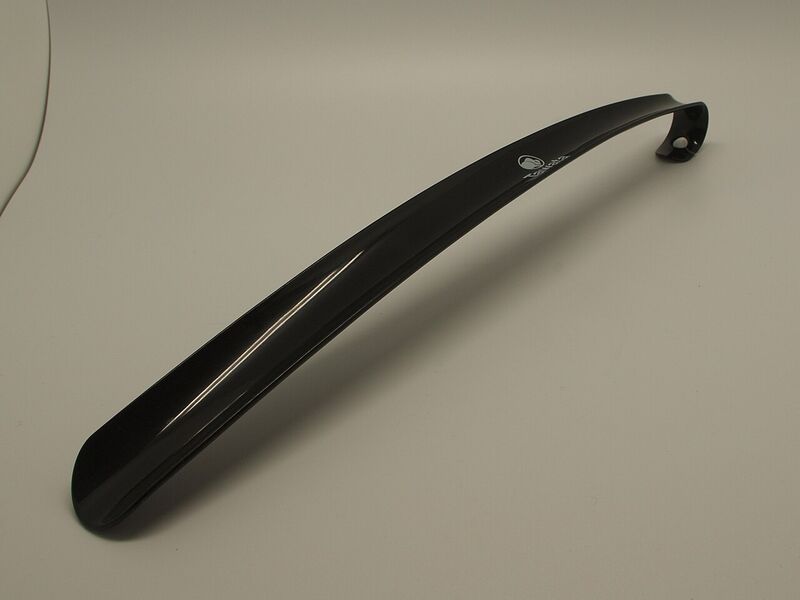
| Long-handled shoehorn | Guides the heel into a shoe without bending | Hip or back precautions, stiff knees | Length, hook at the end for hanging, rigid material |
| Elastic or no-tie laces | Turn lace-ups into slip-ons | One-handed dressers, weak fingers | Tension that keeps the shoe secure; shoes must still stay on firmly |
| Reacher | Long-handled grabber to pick up clothing or pull trousers up over the feet | Limited bending or reach | Length, trigger effort, jaw grip; see our reacher and grabber guide |
| Dressing stick | A rod with hooks to push or pull garments on and off | Limited shoulder or hip movement | Hook shapes at each end, length, light weight |
| Buttonhook | A wire loop that pulls a button through its hole | Arthritis, tremor, numb fingertips | Thick handle for grip; some combine a zipper pull |
| Zipper pull | Loop or tab added to a zip tab | Weak pinch grip, one-handed dressing | Size of loop, secure clip |
| Adaptive clothing | Front openings, hook-and-loop closures, elastic waists, magnetic or large fasteners | Anyone for whom buttons and pull-over tops are hard, including people with dementia | Washability, fastener type, ease for the person and the helper |
How to choose dressing aids: fit, features and safety
- Watch a normal morning. Note exactly which step fails: reaching the feet, a top over the head, buttons, or balance. Buy for that step only.
- Follow movement precautions. After hip replacement, MedlinePlus advises sitting to dress, not crossing the legs, and using a reacher, a long-handled shoehorn, elastic laces and a sock aid so you do not bend too far. It adds: put pants and socks on the operated leg first, and take clothes off that side last.
- Sit down to dress. Both VA caregiver resources advise sitting while dressing. The MedlinePlus hip-care page favors a firm chair with a straight back and armrests, or the edge of a stable bed, and warns against low or soft seats.
- Match grip to the hand. Thick, cushioned handles or loops are easier for arthritic hands. Try the trigger on a reacher before buying.
- Change the clothes, not just the tools. VA stroke guidance suggests loose clothing, elastic waistbands, garments that fasten in front rather than pulling over the head, and hook-and-loop fasteners in place of buttons, zips and laces.
- Mind the feet. VA guidance calls for shoes with non-skid tread that do not slip off easily, and NIA suggests slip-on shoes that stay on or hook-and-loop straps in place of laces.
Costs, Medicare and where to try dressing aids
Original Medicare and equipment. Medicare.gov's DME test has five parts: the item survives repeated use, has a medical purpose, would not normally help a healthy person, is for home use, and should last three years or longer. Small dressing aids do not appear on Medicare's list of covered equipment that we read, and CMS's national coverage list for DME marks some daily-living items, such as grab bars, as a "self-help device; not primarily medical in nature" and denies them. Plan on paying for dressing aids yourself, and ask the supplier before assuming any coverage.
Occupational therapy is different. Medicare.gov says Part B covers outpatient occupational therapy when a doctor, nurse practitioner, clinical nurse specialist or physician assistant certifies you need it. Once the Part B deductible is paid, you owe 20 percent coinsurance on what Medicare approves, and there is no yearly dollar cap on medically necessary outpatient therapy. An OT visit can include learning to use dressing aids.
Medicare Advantage and Medicaid. Medicare Advantage plans may offer extras that Original Medicare does not, and Medicaid home and community-based services vary by state. Ask each plan or your state Medicaid office.
Try before buying. Each state's AT program, paid for partly by ACL, can show you equipment, lend it briefly, or pass on items other people no longer need. ACL's own definition of assistive technology includes "low tech" items like a built-up handle on a spoon, so simple dressing aids fall within scope. Use the AT3 Center directory to find your state's program.
We give no prices because no official source we read lists them.
Care. Wipe plastic sock aids and reachers clean, check cords and loops for fraying, and replace elastic laces when they lose stretch.
Limitations and safety
- Tools do not replace a balance plan. Standing on one leg to step into trousers is a fall risk. Sitting removes most of it.
- Cords and long handles can catch. Store sock aids and dressing sticks off the floor so they do not become trip hazards.
- Compression stockings are a special case. They are harder to put on than ordinary socks; ask the clinician who prescribed them which aid, if any, they recommend.
- Dementia changes the approach. For people with memory loss, gadgets that need several steps can add confusion. NIA's advice focuses on fewer choices and simple clothing instead.
- Look at the skin. VA stroke caregiving guidance advises checking the skin regularly for rashes or sores and raising concerns with the healthcare team; dressing time is a natural moment to look.
How a caregiver can help with dressing
The goal is to keep the person doing as much as they safely can. NIA advises letting someone with dementia dress on their own for as long as possible, and VA stroke guidance says to let them handle as much of the task as they can, with you close by. Practical steps:
- Set up a dressing station: a sturdy chair, the aids hung on a hook within reach, and the day's clothes on the bed.
- Lay clothes out in order. NIA suggests underwear first, then pants, then a shirt, then a sweater, and handing over one item at a time or giving step-by-step instructions.
- Reduce choices. NIA suggests keeping only one or two outfits in the closet at a time and buying duplicates of a favorite outfit.
- Use the affected side rule. After a stroke, VA guidance says to put the weaker arm or leg into clothing first and take it out last.
- Allow time. Rushing leads to frustration and unsafe shortcuts. Build dressing into the morning schedule.
- Practice with the OT. Join a therapy session to learn the technique, then coach the same way at home.
Helping someone dress, wash and use the toilet counts as personal care; the companion care vs personal care guide sets out where the line falls. A personal care aide can be there each morning for dressing, and a mobility assistance aide can help with getting up from the bed or chair. CaregiverConnect lets families advertise the role for free and pick the person themselves. No background checks are carried out by us, so take the steps on our safety page first, then find a caregiver near you.
Frequently asked questions
What is a sock aid and how do you use one?
It is a shell you slide a sock over. Sitting down, you drop the shell to the floor using its cords or handles, put your foot in, and pull the sock up without bending. An occupational therapist can show the technique.
What dressing aids are used after hip replacement?
MedlinePlus lists a reacher, a long-handled shoehorn, elastic shoelaces and a sock aid, used while sitting so you do not bend too far. Follow the precautions your surgeon and therapist give you.
Does Medicare pay for dressing aids?
Small dressing aids do not appear on Medicare's covered equipment lists we read, so expect to pay for them. Medicare Part B does cover outpatient occupational therapy, which can include training in their use, when a provider certifies the need.
What clothing is easiest for seniors to put on?
VA and NIA caregiver guidance suggests loose clothing, elastic waistbands, front-fastening tops, hook-and-loop closures in place of buttons and laces, and slip-on shoes with non-skid soles that stay on.
How can I help someone with dementia get dressed?
NIA suggests laying out clothes in the order they go on, handing over one item at a time, limiting choices to one or two outfits, and letting the person dress themselves for as long as possible.
What is a buttonhook?
A small tool with a wire loop on a handle. You pass the loop through the buttonhole, catch the button and pull it through, which helps people with arthritis, tremor or numb fingers.
Sources
- eCFR, 21 CFR 890.5050 Daily activity assist device (FDA classification)
- Medicare.gov, Occupational therapy
- Medicare.gov, Durable medical equipment (DME) coverage (archived copy, 2026-10-23)
- CMS, National Coverage Determination 280.1 Durable Medical Equipment Reference List
- Medicare.gov, What's not covered by Original Medicare
- NIA, Alzheimer's Caregiving: Bathing, Dressing, and Grooming (read via web.archive.org copy of 2026-07-30)
- NIA, Osteoarthritis (read via web.archive.org copy of 2026-07-30)
- VA RESCUE Stroke Caregiving, Everyday Personal Care
- VA Dementia Caregiver Web Support, Bathing, Dressing and Grooming
- APTA ChoosePT, Physical therapy guide to total hip replacement
- MedlinePlus, Taking care of your new hip joint
- Medicaid.gov, Home and Community-Based Services 1915(c) (read via web.archive.org copy of 2026-10-09)
- ACL, Assistive Technology (State AT programs)
- AT3 Center, State AT program directory
Ready to find a caregiver?
Post what you need for free and see which caregivers near you apply.