Walking Canes for Seniors: Types, Height and Use
A cane is the lightest walking aid and often the first one an older adult tries. Picking the right kind and setting it to the right height matters more than the brand. This guide compares the main cane types, explains how to measure and use one, and covers what Medicare pays for and when a physical therapist should take a look.

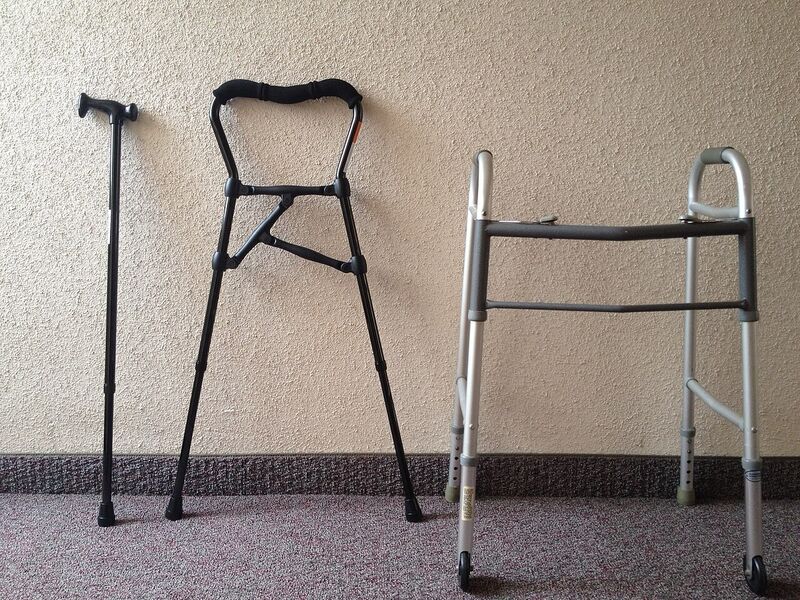

Who may benefit from a walking cane
A 2023 Elder Care sheet for clinicians from the Arizona Center on Aging (University of Arizona) says canes are used by about one in ten older adults and are mainly for balance and stability. It notes that a standard cane can take up to about a quarter of a person's weight; people who need heavier support generally need a walker. MedlinePlus describes the typical cane user as someone with mild balance trouble, or mild weakness or pain in one leg, for example after an injury or an operation.
A professional check may help when:
- the person is leaning hard on the cane, or on furniture, to get around;
- they have had a fall or a near miss;
- a surgeon has given instructions about how much weight one leg may take;
- they have had a stroke or another neurological condition affecting one side.
MedlinePlus says a surgeon or physical therapist can help pick the right cane and that a walker or crutches may suit someone with more pain, weakness or unsteadiness. ChoosePT adds that older adults using canes should be fitted and assessed by a physical therapist.
How we wrote this guide
Nobody on our team has tested canes for this article, and we have no affiliate or advertising deals with any maker. No brand is recommended. We relied on the Arizona Center on Aging cane sheet, MedlinePlus patient instructions, ChoosePT (American Physical Therapy Association), Medicare.gov, CMS coverage documents, the CDC, VA and ACL. Weight limits and height ranges come from manufacturer spec pages read on November 3, 2026, quoted only as examples.
Types of walking cane compared
| Cane type | Best matched to (Arizona sheet) | Height range (example read Nov. 3, 2026) | Weight limit (example) | Notes |
|---|---|---|---|---|
| Standard single-point cane, fixed length (often wood) | Balance help, not weight bearing | Fixed; must be cut or bought to length | Check the label | Has to be fitted before use because it cannot be adjusted |
| Standard aluminum cane, adjustable | Balance help, not weight bearing | Push-button settings | Check the label | Adjustable, so exact fit before buying matters less |
| Folding cane | Balance help; travel | 32 to 36 in. on one model | 300 lb on that model | Folds into four parts for a bag |
| Offset cane | Occasional partial weight bearing, often hip or knee arthritis | 30 to 39 in. on one model | 300 lb on that model | Handle sits over the shaft, so weight goes straight down |
| Quad cane, small base | More substantial support | 30 to 39 in. on one model | 300 lb on that model | Four short legs; stands on its own |
| Heavy-duty (bariatric) quad cane | More substantial support for heavier users | 30 to 39 in. on one model | 500 lb on that model | Large and small bases sold |
| White probing cane | Finding obstacles with low vision | Not a support cane | Not applicable | Gives feedback, not support; not covered by Medicare |
The height and weight examples are from Drive Medical spec pages and are not recommendations. Different models and makers list different limits.
How to choose and fit a cane
Measure the height
Ask the person to stand tall in everyday shoes with arms loose at their sides. The Arizona sheet says the top of the cane should come to the crease of the wrist, and that the elbow should be bent about 20 degrees when they grip the handle. MedlinePlus gives the same wrist-level guide. A cane that is too long pushes the shoulder up; too short and the person stoops.
Pick the hand
MedlinePlus puts the cane on the side away from the leg that is weak or recovering from surgery. The Arizona sheet adds a nuance: when a cane is used to take weight off a painful or injured leg it goes on the opposite side, but when it is only for balance many people use it in their dominant hand. If in doubt, ask the therapist.
Choose the grip and tip
MedlinePlus advises a comfortable handle. People with arthritic hands may find a larger or contoured grip easier. Check the rubber tip for tread, and keep a spare.
Match the base to the need
A single tip is lighter and easier on stairs. A quad base gives more support, but every foot of the base must be on the ground before the cane takes any weight, which is harder on uneven paths.
Walking, curbs and stairs with a cane
- Move the cane forward at the same time as the weaker leg, so the tip lands about level with that foot.
- Press down on the cane to ease the load on the weaker leg, then step past it with the stronger leg.
- Turn by pivoting on the stronger leg, and go slowly while learning.
- On a curb or single step going up, lead with the stronger leg; coming down, put the cane down first, then the weaker leg. MedlinePlus sums it up as "up with the good, down with the bad."
- On stairs, hold the rail with one hand and the cane with the other, one step at a time, and pause at the top to steady.
- Sit and stand from a chair with armrests where possible.
Cane costs, Medicare coverage and upkeep
Medicare.gov lists canes under Part B durable medical equipment. Coverage depends on a doctor or other provider ordering it for use at home, and on buying from a Medicare-enrolled supplier. The person's share after the yearly Part B deductible is 20% of the approved amount, and a supplier that does not take assignment can charge more. Medicare's DME booklet says it purchases low-cost, routinely bought items such as canes rather than renting them. One exception is spelled out on the cane page: Medicare doesn't cover white canes for the blind.
Medicare Advantage plans cover the same DME categories, but suppliers and cost sharing vary by plan, so call the plan first. Veterans enrolled in VA health care can ask their VA provider for a prosthetics consult. Your state's AT Act program, found through the AT3 Center's directory, may have canes you can try out or borrow first. We do not quote prices because none of our sources lists one.
Upkeep: MedlinePlus says to check tips daily and replace worn ones; medical supply stores and drugstores sell them. Make sure the push-button clicks fully into its hole after any height change, and replace a cane with a bent shaft.
What a cane cannot do
- It carries limited weight. The Arizona sheet puts a standard cane's support at up to about 25% of body weight. A person who needs more may need a walker.
- It does not guarantee fewer falls. The same sheet says using a mobility device does not necessarily mean fewer falls, though most people who fall at home did not have their device with them at the time.
- A poor fit is a hazard. ChoosePT, citing a 2009 study of emergency department data, ties over 47,000 falls to canes and walkers that were badly fitted or wrongly used.
- Borrowed canes rarely fit. ChoosePT advises against using a cane from a friend or relative.
- A white cane is a different tool. Probing canes help people with low vision find obstacles but are not built to lean on.
How a caregiver can help with cane use
- Keep the cane in the same spot by the bed and chair so the person never stands up without it.
- Check the tip and the height button once a week.
- Stay close while they practice curbs and stairs, on the weaker side, until the pattern is automatic.
- Give them a small backpack, fanny pack or shoulder bag; MedlinePlus suggests these so hands stay free.
- Clear loose rugs and cords from the usual routes and keep floors dry.
- Watch for signs the cane is no longer enough, such as gripping furniture or shuffling, and raise them with the doctor.
For regular help on walks, errands or appointments, a mobility assistance or companion care caregiver can be there in person. CaregiverConnect lets you list the job for free and talk to applicants directly; vetting is your responsibility because we do not screen anyone (see our safety page). When ready, find a caregiver near you. Comparing a cane with a walker? Read how to choose a walker.
Frequently asked questions
How do I know what height my cane should be?
Stand straight with arms hanging. The handle should line up with the crease of the wrist, and the elbow should bend roughly 20 degrees when holding it, according to the Arizona Center on Aging sheet.
Which hand should a senior hold a cane in?
Usually the hand opposite the weak or painful leg, as MedlinePlus advises. The Arizona sheet notes that people using a cane only for balance often use their dominant hand. A therapist can confirm.
Is a quad cane better than a regular cane?
It gives more support, which the Arizona sheet recommends for people who need more weight bearing. It is heavier, and all four feet must be down before leaning on it, so it is less handy on rough ground and stairs.
Does Medicare cover walking canes?
Yes, under Part B as durable medical equipment, when ordered by a provider for home use and supplied by an enrolled supplier. Expect a 20% share once the deductible is met. White canes for the blind are not covered.
What is an offset cane for?
Its handle bends so the hand sits over the shaft. The Arizona sheet says it suits occasional partial weight bearing and is often suggested for hip or knee arthritis.
When should a senior switch from a cane to a walker?
When they need more support than a cane gives. MedlinePlus says a walker may be better if pain, weakness or balance problems are more than mild. Ask a doctor or physical therapist to assess.
Sources
- University of Arizona Center on Aging, Elder Care: Canes (January 2023, PDF)
- MedlinePlus, Using a cane
- MedlinePlus, Mobility aids
- APTA ChoosePT, Tips to safely use walking aids
- Medicare.gov, Canes coverage
- Medicare.gov, Medicare Coverage of Durable Medical Equipment & Other Devices (CMS Product No. 11045, PDF)
- CMS, NCD 280.1 Durable Medical Equipment Reference List
- CDC, Facts about older adult falls
- VA, Assistive Technology (Rehabilitation and Prosthetic Services)
- AT3 Center, Find a state assistive technology program
- Drive Medical, Aluminum Folding Canes with Gel Grip (spec page, read 2026-11-03)
- Drive Medical, Offset Handle Aluminum Canes (spec page, read 2026-11-03)
- Drive Medical, Quad Canes, Small Base (spec page, read 2026-11-03)
- Drive Medical, Bariatric Quad Canes (spec page, read 2026-11-03)
Ready to find a caregiver?
Post what you need for free and see which caregivers near you apply.