Mobility Scooters for Seniors: What to Know Before You Buy
A mobility scooter lets someone who can still sit up well, but cannot walk far, cover distances that would otherwise keep them at home. It is also large, heavy and steered with a tiller, which rules it out for some people. Here is what to weigh before buying or renting one, and what Medicare and the VA actually require.

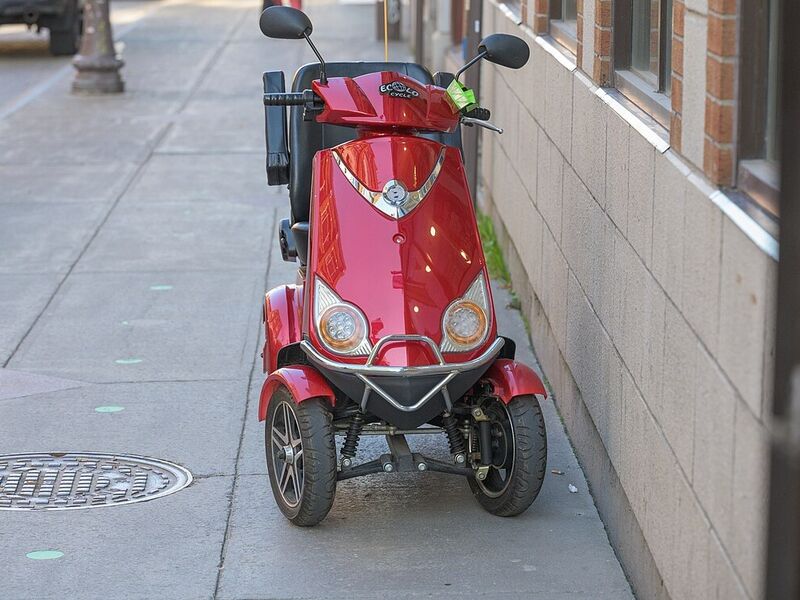

Who may benefit from a mobility scooter
Official definitions describe the typical scooter rider closely. A VA directive on wheeled mobility devices (December 2021) says power scooters are prescribed to Veterans with adequate sitting balance who cannot walk long distances, who do not need a manual wheelchair for most of their mobility, and who can safely transfer on and off. Medicare's April 2026 fact sheet adds that a rider must be able to get on and off safely and be strong enough to sit up and work the controls. CMS's mobility equipment rules (NCD 280.3) ask whether the person has the strength and postural stability to drive one.
That leaves out some people: anyone who slumps or slides when seated, cannot turn the tiller, or has trouble judging traffic and obstacles. Memory, judgment and vision all appear in the CMS criteria as limits that can make powered mobility unsafe. A doctor's exam, and often a physical or occupational therapy assessment, can answer whether a scooter, a power wheelchair or a manual chair fits better. See our wheelchair guide for the alternatives.
How we wrote this guide
We did not ride or test any scooter. No retailer or maker paid us, we use no affiliate links, and we name models only to show what spec sheets list. Facts come from Medicare.gov and its official booklets, CMS coverage determinations, a VA directive, the FDA, ACL and the AT3 Center. The speed, range and capacity examples were copied from maker spec pages on November 3, 2026.
Types of mobility scooter compared
| Type | Turning radius | Listed range and top speed | Scooter weight | Weight capacity |
|---|---|---|---|---|
| Compact three-wheel | 45.5 in. on the example checked | Up to 9 mi; 4.25 mph | 85 lb | 300 lb |
| Compact four-wheel travel | 53 in. on the example checked | Up to 14 mi with the larger battery; 4 mph | 100 lb (comes apart for a car) | 300 lb |
| Automatic folding travel | Check the label | Up to 13 mi; 4 mph | 60 lb; heaviest piece 55 lb | 300 lb |
| Full-size four-wheel | 54 in. on the example checked | Up to 16 mi; 4 mph | 187 lb | 400 lb |
| Heavy-duty four-wheel | 53 in. on the example checked | Up to 25 mi; 8 mph | 264 lb | 425 lb |
All rows are single examples from Drive Medical U.S. product pages, chosen to show the spread, not to recommend a model. Medicare groups scooters for prior-authorization purposes into three weight bands: 300 lb or less (standard), 301 to 450 lb (heavy duty) and 451 to 600 lb (very heavy duty). Range figures are listed maximums; check the manual for the conditions behind them.
How to choose a scooter: fit, features and safety
Three wheels or four
On the spec pages we read, the three-wheel model turned in 45.5 inches against 53 to 54 inches for four-wheel models, so three wheels suit tighter indoor spaces. Four wheels give a wider base. Ask the therapist which the person can handle safely.
Where it will be used
Ground clearance on the models checked ran from 2.5 inches on compact designs to 4 inches on a heavy-duty one. If the usual route includes curbs, gravel or slopes, ask the dealer whether a model's clearance and battery suit it; for store aisles and apartments, compare turning radius first.
Getting it into a car
Travel models either break into pieces or fold. Look for the "heaviest piece" figure, 55 pounds on one folding model, and be honest about who can lift it. Otherwise you need a vehicle lift or ramp.
Seat and controls
Have the person sit on it, swivel the seat, reach the tiller and work the throttle for several minutes. Check that their feet rest flat and that they can twist to look behind.
Weight capacity
Use the capacity on the label of the exact model, and ask the dealer whether it includes bags and accessories.
Charging and storage
You need a dry place to park it next to an outlet, and a routine for charging.
Scooter costs, Medicare coverage and maintenance
Medicare calls a scooter a power-operated vehicle and covers it under Part B as durable medical equipment, but the rules are strict:
- The need must be inside the home. Medicare's DME booklet lists scooters among power mobility devices "needed for use inside the home." A need that exists only outside the house does not meet that wording.
- Face-to-face exam first. The doctor examines the person, decides whether they can safely operate the scooter and sends a written order explaining why it is needed.
- Home check. The doctor or supplier must confirm the scooter can be used in the home, for example that it is not too big for the doorways.
- Who qualifies. A person for whom canes, walkers and a manual wheelchair are all unworkable, yet who can mount and dismount safely and sit up to steer.
- Costs. With a supplier that accepts assignment, the rider owes 20% of Medicare's approved figure after meeting the Part B deductible.
- Rent if short-term. Medicare's fact sheet says people who will not need a scooter long term can rent one.
Medicare warns that a supplier offering a "free" scooter, cash, a waived copay or a doctor you have never met is a sign of fraud. A Medicare Advantage plan has to include scooters as a DME category too, though it picks the suppliers and sets the cost sharing. Veterans can ask a VA provider for a consult; the VA directive notes it generally does not treat a scooter as a spare power wheelchair. State AT programs listed by the AT3 Center may offer demonstrations or reused equipment. We quote no prices because our sources list none.
Maintenance: follow the manual on battery charging and tire checks, and keep the dealer's service number handy. If a scooter is rented through Medicare, the supplier has to keep it working.
Scooter limitations and risks
- Not a wheelchair substitute. The VA defines a scooter as having limited seat modification and prescribes one only to people with adequate sitting balance. Its definition of a power wheelchair, by contrast, covers a variety of seating and positioning needs.
- Tight turns. Even the compact model we checked lists a 45.5-inch turning radius. Measure hallways, door openings and the bathroom against the figure for any model you consider.
- Radio interference. The FDA told makers of powered wheelchairs in 1993 that it had reports of chairs moving on their own near certain radio frequencies. Read the manual's interference warnings.
- Range is not guaranteed. Listed range is a maximum; plan trips well inside it until you know the battery.
- Traffic and judgment. CMS lists cognition, judgment and vision among the limits that can make powered mobility unsafe. A rider should be able to judge curbs, crossings and people on foot.
How a caregiver can help with scooter use
- Practice in an empty parking lot first: starting, stopping, reversing and tight turns.
- Walk the usual routes together and note curb cuts, steep ramps and narrow doors.
- Set a nightly charging routine and check the battery gauge before every outing.
- Lift and stow the pieces, or run the vehicle lift, so the rider does not strain.
- Help with getting on and off: seat swiveled and locked, power off, feet planted.
- Watch for signs of trouble, such as near-misses, confusion about the controls or bumps into walls, and tell the doctor.
Hiring a mobility assistance caregiver brings help with transfers and trips, and a companion caregiver can ride along to errands or appointments. Our transportation options guide covers rides when the scooter is not enough. On CaregiverConnect, families post jobs free of charge and pick who to hire; there are no agency fees, and checks such as references are up to you (see safety). Start here to find a caregiver near you.
Frequently asked questions
Does Medicare pay for mobility scooters for seniors?
Part B can, if the person needs it to get around inside the home, has a face-to-face exam and written order, can get on and off and operate it safely, and the home can fit it. The person pays 20% after the deductible.
Is a 3-wheel or 4-wheel scooter better?
Three-wheel scooters turn tighter (45.5 inches on one model we checked, compared with 53 to 54 inches for four-wheel examples). Four-wheel models have a wider base. Ask a therapist which the rider can manage.
How far can a mobility scooter go on one charge?
The examples we read listed maximum ranges from 9 to 25 miles. Real range depends on the conditions in the manual, so plan shorter trips at first.
How fast do mobility scooters go?
Most models we checked listed a top speed of about 4 mph; one heavy-duty model listed 8 mph.
Can a scooter fit in a car trunk?
Travel models come apart or fold. Check the heaviest-piece weight, 55 pounds on one folding model, and whether someone can lift it.
Should a senior get a scooter or a power wheelchair?
Scooters suit people with good sitting balance who cannot walk far. Medicare says a power wheelchair may be appropriate when someone cannot use a manual chair at home or does not qualify for a scooter. A doctor's exam decides.
Sources
- Medicare.gov, Wheelchairs & scooters coverage
- Medicare.gov, Medicare Coverage of Wheelchairs & Scooters fact sheet (CMS Product No. 11046, April 2026, PDF)
- Medicare.gov, Medicare Coverage of Durable Medical Equipment & Other Devices (CMS Product No. 11045, PDF)
- CMS, NCD 280.3 Mobility Assistive Equipment
- VA, VHA Directive 1173.06 Wheeled Mobility Devices (Dec. 13, 2021)
- FDA, Letter to powered wheelchair manufacturers on radio-frequency interference (May 1993)
- ACL, Assistive technology (state AT programs)
- AT3 Center, Find a state assistive technology program
- Drive Medical, Scout Compact 3-Wheel Scooter (spec page, read 2026-11-03)
- Drive Medical, Scout LT 4-Wheel Scooter (spec page, read 2026-11-03)
- Drive Medical, ZooMe Auto-Flex Folding Travel Scooter (spec page, read 2026-11-03)
- Drive Medical, Ventura 4-Wheel Scooter (spec page, read 2026-11-03)
- Drive Medical, Panther 4-Wheel Heavy Duty Scooter (spec page, read 2026-11-03)
Ready to find a caregiver?
Post what you need for free and see which caregivers near you apply.