Bedside Commodes: Types, Setup and Daily Care
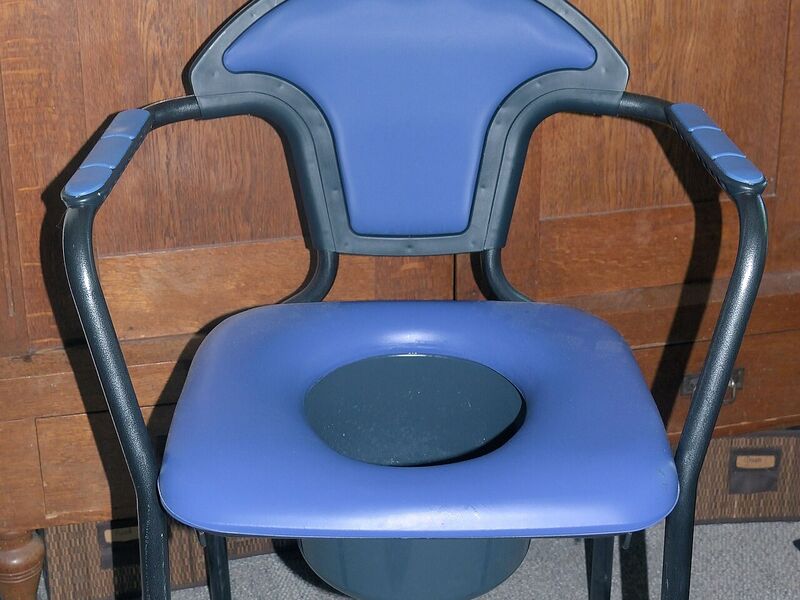
A bedside commode is a portable toilet: a chair frame with a seat and a lidded bucket underneath. It shortens a night-time walk to a few steps, or replaces the trip altogether when the bathroom is upstairs or out of reach. MedlinePlus suggests a portable commode on the floor where a person spends most of the day if stairs are a problem. This guide covers the types, setup, daily care and Medicare's rules.


Who may benefit from a bedside commode
- Someone whose only bathroom is on another floor and who should not be using stairs, for example after an operation. MedlinePlus advises a bathroom or portable commode on the same floor where you spend most of the day.
- A person who gets up several times a night and is unsteady when half-awake.
- Someone recovering in bed for a period, where reaching the bathroom takes more effort than they have.
- People who often cannot reach the bathroom in time.
If the bathroom is reachable and the problem is a toilet that is too low, see raised toilet seats and safety frames.
Assessment. Ask the person's doctor, or the hospital discharge team, whether a commode is needed and whether to arrange it before discharge. A therapist (PT or OT) can rehearse the bed-to-commode transfer with the person and the family. MedlinePlus suggests asking a provider for a referral to a therapist who can look at the home. The doctor also matters for coverage, because Medicare needs a provider's order.
How we wrote this guide
None of the commodes here went through any hands-on test by us. No company paid to be included, no link earns us money, and we do not recommend particular models. Advice is drawn from the National Library of Medicine's MedlinePlus pages, the CDC STEADI home checklist, Medicare.gov and its DME booklet, and the CMS DME reference list. Specifications such as weight capacities and seat heights come from Drive Medical's commode catalog and manuals as published on 3 November 2026, as examples of what manufacturers publish.
Types of bedside commode compared
| Type | Description | May suit | Considerations |
|---|---|---|---|
| Standard folding commode | Steel frame, fixed arms, plastic seat and lid, removable bucket; folds flat | People who can stand and turn to sit | Fixed arms mean the person must step around them |
| Drop-arm commode | One or both arms swing down out of the way | Sideways transfers from a bed or wheelchair without standing fully | Arm locks must be checked every time |
| Wheeled shower commode chair | Commode on casters that can be rolled into a step-free shower | People who cannot walk to the bathroom | Needs wheel locks and level floors; only for roll-in showers |
| Padded transfer bench/commode | Tub transfer bench with a commode opening | Bathrooms short of space | See tub transfer benches |
| Bariatric commode | Wider seat and heavier frame | Larger users | Takes more room beside the bed |
Capacities and sizes. On Drive Medical's catalog, its standard commodes list 350 pounds, drop-arm models 300 to 350 pounds, and bariatric models 500, 650 and 1,000 pounds. One standard folding commode adjusts from 15.5 to 21.75 inches high with a 7.5-quart bucket, cover and splash shield; one drop-arm model adjusts from 19 to 23 inches with 19 inches between the arms. Check the label for the model in front of you.
How to choose: fit, features and safety
Fit
- Height: feet flat on the floor when seated. For sideways transfers from the bed, ask the therapist what seat height to match.
- Width: the space between the arms should clear the person's hips without leaving room to slide sideways.
- Room: measure the floor beside the bed; a helper needs space to stand at the side too.
Features
- Drop arms for anyone who transfers sitting down or with help.
- A lid and a bucket with a carry handle and splash guard.
- Back support and padded seat for longer sitting; padding should wipe clean.
- A frame that folds if the commode is temporary or will travel.
Safety points from the manuals
- The toilet seat part must be down before anyone sits, or the commode can break.
- All four legs at the same height, with buttons fully through their holes; all four rubber tips touching the floor at all times.
- Replace torn, worn or missing tips immediately.
- Users with limited strength should be supervised or assisted, Drive's commode manual says.
Medicare coverage, costs and setup
Medicare Part B covers commode chairs as durable medical equipment. Medicare.gov's commode chair page sets out the rules:
- A doctor or other health care provider must order it for use in your home.
- Your doctor and supplier must be enrolled in Medicare; Medicare pays nothing to a supplier outside its enrollment.
- Cost to you: 20% coinsurance on the Medicare-approved amount after the annual Part B deductible, as long as the supplier accepts assignment. Suppliers who refuse assignment are allowed to charge above that.
- Medicare.gov notes that, by type of equipment, you may have to rent, may have to buy, or may get to pick; some rentals turn into ownership after a set number of payments. For a rental, confirm the supplier will accept assignment for every month.
The CMS DME reference list (NCD 280.1) adds the medical condition: commodes are "covered if patient is confined to bed or room." It explains that room-confined means leaving the room is medically contraindicated, and that the ease of reaching a bathroom generally does not count. It also allows payment when the home has no toilet, or when the person's condition confines them to one floor that has no bathroom. Ask the doctor to describe the situation in the order.
Medicare's DME booklet adds that if you own covered equipment, Medicare may also help pay for repairs. Medicare.gov says Medicare Advantage plans must cover all medically necessary services Original Medicare covers; ask the plan which suppliers to use. Medicaid and VA have separate rules. Medicare.gov has a tool to find equipment suppliers.
Setup by the bed. Put the commode on a level floor close to the bed, in the spot and on the side a therapist suggests. MedlinePlus advises a bed low enough that feet touch the floor from the edge. Add a nightlight; the CDC suggests one on the path from the bedroom to the bathroom. Keep toilet paper, wipes and a hand cleaner within reach of the seat.
Daily care: emptying, cleaning and skin
- Empty the bucket into the toilet promptly and keep the lid on between uses.
- Rinse the bucket, then clean it and the seat with a household cleaner, following the product manual. Wear disposable gloves and wash your hands afterward.
- Check the frame weekly: tips, height buttons, arm locks and any loose screws.
- Look after skin. MedlinePlus's pressure-injury guidance says to clean the area right away after urinating or a bowel movement and to dry it well, and to check the skin every day.
- Help the person move without dragging; MedlinePlus warns dragging can cause skin breakdown.
Limitations and risks
- A commode reduces walking but not the transfer. Getting on and off is still the point where people can fall; a helper or a therapist's technique matters.
- Wheeled commodes can roll if the casters are not locked.
- Privacy and odor can be hard on dignity. Screens, a lid and prompt emptying help.
- A commode does not replace regular bathroom visits for washing, and it does not address the cause of urgency or frequent night-time trips. Raise new or worsening bladder problems with the doctor.
How a caregiver can help day to day
- Position the commode before helping the person up, with brakes or arms locked.
- Give them time and privacy, staying within earshot.
- Help with wiping and skin checks if the person wants it, and handle emptying and cleaning.
- Keep a short log of anything unusual (blood, pain, much more or less often) to share with the family and doctor.
Toileting help is part of personal care; help moving from bed to chair falls under mobility assistance. The companion vs. personal care guide explains how to describe the job. On CaregiverConnect families post jobs free and pick whom to employ. We do not check backgrounds; our safety page lists what to verify. To start, find a caregiver near you.
Frequently asked questions
Does Medicare pay for a bedside commode?
Part B covers commode chairs as DME when a provider orders one for home use and it comes from a Medicare-enrolled supplier; the coinsurance is 20% once the deductible is met. CMS conditions coverage on being confined to bed or room, which includes a home with no toilet or no bathroom on the floor you are confined to.
What is a drop-arm commode?
A commode whose arms swing down, so a person can slide across sideways from a bed or wheelchair instead of standing and turning.
How often should a commode bucket be emptied?
Promptly, with the lid kept on in between. Rinse and clean it as the manual directs, wearing gloves, and wash hands afterward.
Can a bedside commode be used over the toilet?
Only if the manual for that model says it can be. The commode manuals we read did not describe over-toilet use, so check yours, or ask the supplier.
How much weight can a bedside commode hold?
It varies. One manufacturer lists 350 pounds for its standard commodes, 300 to 350 for drop-arm models and up to 1,000 pounds for bariatric ones. Use the capacity printed on the label.
Sources
- Medicare.gov, Commode chairs coverage
- Medicare.gov, Medicare Coverage of Durable Medical Equipment and Other Devices (CMS Product No. 11045, 2/2025, PDF)
- Medicare.gov, Find medical equipment and suppliers
- CMS, NCD 280.1 Durable Medical Equipment Reference List
- MedlinePlus, Preventing falls
- MedlinePlus, Getting your home ready - knee or hip surgery
- MedlinePlus, Bathroom safety for adults
- MedlinePlus, Preventing pressure injuries
- CDC STEADI, Check for Safety brochure (read via web.archive.org copy of 2026-10-11)
- Drive Medical, Standard Commodes catalog, example only
- Drive Medical, Drop-Arm Commodes catalog, example only
- Drive Medical, Bariatric Commodes catalog, example only
- Drive Medical, Folding Steel Commode spec page and owner's manual, example only
- Drive Medical, Drop Arm Steel Commode spec page, example only
Ready to find a caregiver?
Post what you need for free and see which caregivers near you apply.